Showing posts with label Eggs. Show all posts

Friday, March 23, 2018

The Broken Egg at the Decorah North Nest

We asked our panel of eagle experts about the broken egg at the Decorah North nest. Could egg viability be determined from the video? Did they have any ideas about egg breakage? Was Mrs. North likely to produce more eggs?

In general, the panel believed that the egg’s viability couldn’t be determined from the video, although two of them commented that a darker patch in the draining egg fluid could have been an embryo. At 19 days old, an embryo would still have been quite small and not especially easy to see given the circumstances. Since we couldn’t come to a definite conclusion, our answer is “No” – we don’t know whether the egg was viable or not. We have some information about embryonic developmental stages here: https://raptorresource.blogspot.com/2017/03/whats-inside-those-bald-eagle-eggs.html

So why did the egg break? Female eagles lay down calcium in their shell gland/uterus, and their large eggs take a lot of calcium. Was she not able to lay down enough calcium to protect her egg from breaking, and if so, why? She may not have had enough calcium available during that stage of egg formation, or something else could be going on with her reproductive system. One member of the panel asked about her age. Female bald eagles and peregrine falcons can experience reduced fertility as they age. They might lay fewer eggs, strangely colored eggs, oddly shaped eggs, ‘smooshy’ eggs, thinly-shelled eggs, or infertile eggs that never hatch. It’s too early to know whether that’s the case, but we will be watching to see if any of those things happen moving forward.

Was she poisoned again? We saw no sign that she was poisoned this year, and the poison from two years ago would not affect her shell deposition now.

Is Mrs. North likely to produce more eggs? The answers were mixed. If she does, it should happen around March 30, or about 14 days after she lost the first one. Other birds of prey, including gyrfalcons and barn owls, take 14 days to recycle after losing a clutch. I really went back and forth about this (19 days is a long time to incubate an egg!) but the answer gave me some hope, especially given that Mr. and Mrs. North are still copulating. We’re crossing our talons, hoping for the best, and keeping a very sharp eye on Mrs. North!

Tuesday, March 20, 2018

Why did Mom and Dad lay eggs later this year?

We've been getting questions about egg timing. Why did Mom and Dad lay eggs later this year? Overall, avian egg-timing in the temperate zone is heavily regulated by the light cycle. As the days begin to lengthen, birds' gonads swell and produce sex hormones. Around the end of January, our bald eagle pairs switch from infrequent copulation to frequent, highly enthusiastic copulation, putting us on notice for egg watch! Females chase males, males entice females, copulation takes place on a regular basis, and our eagles start laying eggs in mid-February. We have a general egg outline, but what factors correlate to the onset of egg-laying in any given year?

New mates can equal later eggs
While it doesn't always happen, a new mate (male or female) often pushes egg-laying a little later in the eagles and falcons we watch. Sometimes it happens for very obvious reasons, like mid-season mate replacement. Let's say that female falcon A and male falcon B are nesting together on a cliff in mid-March. Falcon A has begun the process of egg production: her egg follicles are swelling, she's gaining weight, and she's copulating like crazy! Unfortunately, she's killed or displaced by female falcon C, who is producing plenty of sex hormones, but no eggs. B doesn't waste any time courting C. His bowing, gifts of food, and copulation will trigger her to begin egg production, but their egg-laying schedule will be pushed back by as much as or more than ten days. Absent other factors, it should float earlier in the years to come.

Later egg-laying can also happen in new couples that don't experience mid-season mate replacement. Both Mom Decorah and Ma FSV laid the first eggs of their lives in early March (March 2, 2009 for Mom Decorah and March 3, 2007 for Ma FSV) but moved earlier as the years progressed. Mom had just achieved sexual maturity when she bonded with Dad, but we don't know if the same is true of Ma FSV. Is initial egg production - an eagle's first egg - a factor in egg timing? How about receptivity in a new pair versus an already bonded pair? We don't know, but it's something we'll be looking at.

Cold dry weather? Predict eggs on the later side!
Having said that, we didn't have a new eagle in Decorah or at Fort St. Vrain this year. So what happened? We decided to look at weather. Using the nearest weather stations we could find to each nest (especially important in Colorado with its altitude-based weather patterns), we obtained historical figures for temperature and dewpoint from January 30 to February 10. There isn't a long time period between the onset of egg-laying and egg-laying itself, so we started around the time that both sets of eagles usually ramp up copulation and ranked our results from latest to earliest laying date.

FSV: January 30 to February 10
1st Egg DateHigh TempMean TempLow TempDewpoint
2/21/1431 F19 F6 F12 F
2/17/1348 F32 F17 F15 F
2/16/1646 F31 F17 F17 F
2/14/1560 F44 F28 F21 F
2/14/1756 F45 F33 F21 F
2/12/1851 F37 F22 F22 F

Decorah Eagles:  January 30 to February 10
1st Egg DateHigh TempMean TempLow TempDewpoint
2/23/1412 F4 F-3 F-3 F
2/21/1837 F20 F8 F4 F
2/20/1730 F21 F12 F15 F
2/18/1629 F22 F16 F19 F
2/18/1524 F16 F9 F12 F
2/17/1234 F28 F22 F23 F

In general, both sets of eagles laid eggs slightly earlier during periods of unusual warmth and slightly later during periods of unusual cold. But much to my surprise, humidity (as measured by dewpoint) turned out to be a slightly better predictor of egg-timing than temperature! What was going on with that - and with the one interesting exception in Decorah in 2015? Time to do a little reading!

It is widely believed that breeding female raptors gain weight by building fat and storing minerals to provide the energy reserves needed for egg-laying and incubation. But a study of female barn owls found that almost all of their pre-laying weight gain was due to water accumulation! From the study's discussion: "To conclude, the gain in body mass observed in breeding barn owls is not due to an accumulation of energy reserves but of an accumulation of water." Incubating female barn owls undergo a more complete molt than incubating bald eagles, but egg production mechanisms are very similar and it seems reasonable to believe that water retention would be similar in both species. The nutrients required for egg formation can be obtained by routine food intake during egg formation, but if the weather is extremely dry, it might take longer for female bald eagles to accumulate the water reserves they need for egg production, especially give that drier weather results in higher levels of evaporative and cutaneous water loss. It wouldn't make a few weeks difference in any given year, but it might make a few days!

I couldn't find an explanation for the anomaly in Decorah in 2015, but this is a relatively small dataset. As we keep records longer, we may learn more about trends in egg-laying. It also might be worth getting weather stations down below our nests to collect local data about temperature, humidity, and wind at each nest. We still have a lot to learn about the ways in which weather and climate affect the birds we watch.

Did you know?
The barn owl study also had some interesting information about fat/lipid dispersal in a breeding female barn owl's body. Although breeding females had fewer body lipids than non-breeding females, they had more subcutaneous fat in the area of their brood patch. The accumulated fat caused their brood patches to increase in size! So Mom's more visible brood patch and slightly larger appearance aren't just our imaginations. She has gained water weight and shifted fat to her brood patch in preparation for egg-laying and incubation. I'm sure that more than a few of us can relate to that!

While we aren't sure why Midwest peregrine falcons are laying eggs earlier, they are laying significantly earlier than they did at the beginning of falcon recovery in our area. Interested in the topic? Check out Average Nesting Trends!

Why didn't you use data from the North pair?
This was a tough one to leave out, especially given that many watchers think Mr. North was a new mate in 2016 - a year of later egg production. However, we only have three years of production here, the eagles have not established a regular laying pattern (2018 was also late), and we have no weather history anywhere near the nest, so I'm not comfortable including their data. We'll see what happens in the years to come.

Things that helped me learn about this topic

Thursday, February 22, 2018

How long does it take Mom to lay an egg?

We've talked about how long it takes bald eagle eggs to hatch after they are laid (an average of 38 days from first egg to first hatch in Decorah), how long hatch takes once pip starts (it can take upwards of 24 hours), and how long it takes Mom to lay each egg (she usually lays the second egg about two to three days after the first, and the third egg roughly four days after the second egg). But how long does it take Mom to make and lay an egg?

We'll start with copulation. It is believed that female bald eagles begin laying eggs five to ten days after productive mating begins. Mom laid her first egg at 7:28PM CT on February 21st, or about eleven days after copulation went from casual to frequent...and very determined on Mom's part.  Between February 10th and February 18th, Mom and Dad copulated nine times that we saw and had an additional 2 failed attempts. Mom took the lead five times - beak biting Dad, footing him, loudly vocalizing her intentions, and mounting him while wagging her tail (https://youtu.be/I4xlu9IEItY). You didn't need to be a male bald eagle to know that Mom meant business!

So we know that bald eagles ensure fertile eggs by copulating regularly, storing sperm in storage tubules, and concentrating sperm at the infundibulum, or site of fertility. But how long does it take Mom to lay an egg once her first yolk has been fertilized? The short answer: approximately two days (48-50 hours). It goes through a lot of changes along the way! Note that our oviduct times were derived using the ratio between bald eagles (~48 hours) and domestic chickens (~25 hours). The actual times could be slightly different.

Step one: I'm ready!
Diagram of the egg-laying process
According to Tim Birkhead, there are no known cases of copulation-induced ovulation in birds. As we've seen in Decorah, female birds signal their fertile status by their interest in (or their insistence on) copulation. In response to an internal clock and the presence of a male - say, Dad - one of Mom's yolks swells until it ruptures the follicle that produced it, releasing a ripe yolk into her oviduct.

How long does it take for her yolk to swell? Our observations suggest about eight to ten days. For comparison, it takes four to five days in small birds like great tits and white-crowned sparrows, six to eight days in larger birds like ducks and pigeons, 10-13 days for large gulls, and up to 16 days in some penguins.

How many follicles are swelling inside Mom each season? In domestic hens, each follicular cohort (follicles that will become eggs) numbers six to twelve follicles, and follicles are selected roughly every 24 hours. We know that Mom's annual cohort measures at least three. Since it takes roughly 48 hours for her to lay an egg, follicle number two must rupture about the time egg number one is laid. Follicle number three experiences a delay of about 48 hours, giving Mom's 'egg-machine' a chance to rest and resupply!

Step two: The infundibulum! Length of stay: ~15 minutes (T - 47+ hours)
While the name infundibulum (funnel) suggests a passive process, the microscopic yolk stays in one place while the infundibulum flows around it. Since Mom and Dad have been copulating regularly and Mom has been storing sperm, hundreds or thousands of Dad's sperm are waiting inside to fertilize it! Fertilized or not, the infundibulum seals the yolk after 15 minutes, and it proceeds on its journey down her oviduct.

How does the yolk stay in the center of the egg? The infundibulum's seal, or chalaza layer, forms the egg's first layer of albumen, aka egg white. The ends of this dense chalaziferous zone twist with other proteins to create two filaments as the egg spirals through the magnum. These filaments will eventually anchor the yolk to the egg's hard calcareous shell, keeping it in place. 

Step three: The magnum! Length of stay: ~5 hours (T - 42.5 hours)
Her yolk makes its next stop in the magnum, where it receives another coating of albumen. The albumen is secreted by special cells in the magnum wall that absorb water and proteins from Mom's bloodstream. The albumen will cushion the developing embryo and provide much of the protein needed for its development. Remember Dad's food gifts? Mom needs all the protein and calcium she can get to produce viable eggs!

Step four:  The isthmus! Length of stay: ~3 hours (T - 39.5 hours)
The yolk moves into the isthmus next. It receives a little more albumen and its inner and outer soft shell membranes, which (like Mom's feathers, beak, and talons) are made of keratin - another protein! The inner shell membrane provides a point of contact for the chorioallantoic membrane that develops in the first three to four days of an embryonic eagle's life. Both membranes help protect the porous egg from bacterial contamination and keep water from escaping too quickly. The membranes sit closely together during the egg's trip through the oviduct, but separate after the egg has been laid.

An egg in cross section, modified from Romanoff and Romanoff, 1949
Step five: The shell gland! Length of stay: ~39 hours (T - 15 minutes)
Mom's yolk, wrapped snugly in its jacket of albumen and shell membranes, moves into her shell gland or uterus. Water and minerals are pumped into the developing egg and a hard calcareous shell is formed around it. 

Mom is removing a lot of calcium from her body to produce the egg shell. While I couldn't find figures for bald eagles, hen chickens remove about 25 mg of calcium from their blood every 12 minutes during active egg shell formation. Since bald eagle eggs are significantly larger than chicken eggs, it seems very likely that she is removing more calcium than that. Anything that can't be derived from dietary sources will be obtained from her skeleton - another reason that food is extremely important right now! 

Step six: The vagina and egg labor! Length of stay: roughly 15 minutes!
We finally have an egg! Mom's initially microscopic yolk has been wrapped in membranes, plumped up, and surrounded by a hard shell. While we don't know whether Mom was aware of the egg before, she is certainly aware of it now! Contraction of a powerful sphincter muscle causes the egg to rotate in her muscular vagina and enter her cloaca pointed-end first. Mom's powerful vaginal muscles and full-body contractions eject the egg through her cloaca and into the waiting egg cup. Two days after Mom's first egg was started, it emerges after her brief egg labor and she lays down for a well-deserved rest! Her second egg is just beginning its journey!

Does Mom feel pain during egg labor? 
We often get asked whether Mom experiences pain or discomfort, especially in the final phase of laying. Whether or not she knows her follicle burst, egg laying is an energetically expensive process and her behavior changed substantially since she started chasing Dad around the nest! Two or three days before she laid egg number one, we started seeing her on and around the nest more. Dad brought several meals to her, and she spent a long period of time in the nest the morning before the egg was laid. While her soft chirps were lovely to hear, she was obviously experiencing some discomfort. It was a relief to all of us when she finally laid the egg!

Mom will incubate her first egg between 35 to 37 days before it hatches. While Dad does his share of incubation, incubation gives Mom the time she needs to rest and build up her reserves. Sweet eagle dreams, Mom - you've earned them!


What happens when a bird loses its nest and mate with an egg in the pipeline? 
We also get asked what happens when a bird's season is interrupted. We haven't seen it at any of our bald eagle nests, but we have seen it in several peregrine falcons. Last year, an interloper laid an egg in the nest box at Dairyland Alma before the returning female ousted her, and Newman spent a lot of time courting and copulating with St. Louis Girl before Michelle showed up and kicked her out. While there isn't much information about it, I would guess that any eggs in the pipeline get laid somewhere. But if follicle stimulation is about more than just lengthening daylight hours - which it appears to be, at least in wild birds, which don't tend to lay eggs absent a male, copulation, and a nest - losing a mate and territory may shut follicle stimulation and yolk production down. This would prevent additional eggs from forming: a wise strategy given how energy intensive egg production is! 


Does it feel like the parts of a female bird's reproductive system were named by committee? Technical language is daunting enough when it fits together nicely! But people have studied birds, especially domestic chickens, for a long time. Not everything we are describing now was named at the same time by the same people, which can lead to an odd combination of words. 
  • Infundibulum is derived from a16th century Latin word for "pour in" (or funnel): infundere.
  • Chalaza is derived from a Greek word that means "small knot": Khalaza 
  • Magnus is a Latin word that means "great". The magnus is the largest part of the oviduct. 
  • Isthmus is derived from a Greek word that means narrow neck of land: isthmos.


Things that helped me learn and write about this topic!
Image Credits
  • Diagram from the paper Sperm storage in the female reproductive tract in birds, Sasanami T, Matsuzaki M, Mizushima S, Hiyama G - J. Reprod. Dev. (2013). Taken from Open i, US Department of Health and Human Services, https://openi.nlm.nih.gov/detailedresult.php?img=PMC3944358_jrd-59-334-g001&req=4
  • Egg cross section derived from The Avian Egg: Alexis L. Romanoff, A.J. Romanoff, 1949. Image credit poultryhub, although it appears in other places as well: http://www.poultryhub.org/physiology/the-avian-egg/. If you own this image and do not want it posted or need the credits changed, please contact me: ries93@gmail.com.

Thursday, March 23, 2017

What's inside those bald eagle eggs?

It is 31 days since egg number one was laid in Decorah, 32 days since egg number one was laid at Decorah North, and 36 days since egg number one was laid in Fort St. Vrain. We are starting hatch watch for Fort St. Vrain on Saturday, Decorah North on Sunday, and Decorah on Monday. The embryonic eagles are either in or approaching their final stages of development now, but what did they look like as they developed and grew inside their eggs?

Dr. Peter Sharpe from the Institute for Wildlife Studies developed a table of bald eagle embryonic development based on work done by Hamburger and Hamilton (1951). While not all bald eagle eggs hatch in 35 days, the stages of development look something like this...

Development of a chick, drawing from Frank Lillie photos. Artist William Sillin
From 0 to 4 days: A single cell is formed by the union of sperm and egg. It divides into multiple cells and forms layers. Head and tail are established, the emerging embryo divides into blocks called somites, and basic life support structures begin to develop, including the nervous system, skin, circulatory system, gastrointestinal system, and optical system.  The embryo turns onto its left side. Its heart begins to beat roughly 72 hours after incubation begins.
Chicken embryo at roughly two days incubation: equivalent to an eagle at about 3.5 days
At four days of age, the embryonic eagle doesn't look anything like a bird, but it has inside and outside layers, it can transport materials through its developing circulatory system, and its nervous system has an anterior-to-posterior template in place. The brain and nervous system will continue to grow and change, but the stage is set for the development of a skeletal system, limbs, a beak and tongue, foot and wing digits, and organs. 


From 3.5 to 9 days: The amnion closes, sealing the developing embryo inside the egg's innermost membrane. The allantois forms to sequester liquid waste and exchange gases through the porous eggshell. Wings, tail, and leg buds form. Eyes develop pigment.  Leg buds grow larger than wing buds and limbs begin to form. Elbow and knee joints are distinct by roughly 8 days and digital grooves - the precursors of toes and wing structures - are distinct by roughly nine days. The embryo's beak and tongue begin to form.
Chicken embryos roughly 23 to 25% of the way to hatch
At nine days, the minute embryonic eagle is about 25% of the way to hatch and still doesn't look especially birdlike. It has a head, eye pigmentation, stiff differentiated limbs, the beginnings of a beak, rudimentary digestive organs, and a defined sex. The stage is set for further organization as the embryo develops an egg tooth, true eyes, and feather germs. 


From 11 to 17 days: The egg tooth and two scleral papillae form on the 11th-12th day. Limbs are bent. Dorsal feather germs form on the 12th day. A nictitating membrane is visible on day 13. Ventral feather germs develop, the eyelids begin closing, and flight feather germs develop. 

A chicken embryo roughly 50% of the way to hatch
At 17.5 days, we are roughly halfway to hatch. Our embryo's head is disproportionately large, but it is definitely a bird. It has a beak, distinct toes, bent limbs, and eyes that take up most of its head. Its eyes and eye cavities aren't done forming and it needs to develop scales, nails, rough pads and spicules, and down feathers. Its yolk sac and small intestines are still outside its body cavity, and it has a lot of growing to do!


From 18 to 23 days: Leg scales, tiny talons, and plantar food pads appear. The eyelids are almost closed and the eyes are no longer quite as large in proportion to the rest of the head.

We are 65% of the way to hatch! Other than the closing of the body cavity, most major morphological changes are done. The eyelids will close, the eyes will grow into their sockets, the eaglet will develop natal down, it will internalize its egg yolk sac, its body cavity will close (leaving behind an egg yolk sac scar) and it will position itself for hatching! 

So what happens right before hatch? Just a few days from external pip, the rapidly growing embryo is taking up nearly all the space in the egg. It...
  • Turns so that its head is at the large end of the egg next to the air space.
  • Pierces the internal membrane - the internal pip - and begins to breathe air with its lungs. Hatch has started!
  • Takes the yolk sac into its body as it consumes most of the remaining albumen and yolk. 
  • Grows enough to contract the hatching muscle, pointing its head up and positioning its egg tooth against the shell of the egg. The eggshell is thinner and weaker than when it was laid, since the growing embryo absorbed calcium from the shell for its bones. 
  • Rubs its egg tooth against the shell, which cuts a small hole. We have an external pip!
  • Rotates its body, slowly cutting a ring around the shell.
  • Pushes its body against the shell, forcing the shell apart.
  • Works itself free of the shell membranes and halves. The eaglet has landed and hatch is complete!
We are looking forward to hatch later this week! Curious about what's in store? Watch this 2015 video of the very final stages of hatch in N2. 


Illustrations were taken from Popular Science Monthly/Volume 71/September 1907/The Problem of Age, Growth and Death III:  Link. Thanks to artist William Sillin for allowing us to use his lovely illustrations: http://www.willsillin.com/ (check it out - his illustrations are very cool!). Also take a look at this cool plate by Keibel and these lovely photos of chicken embryos: http://www.microscopy-uk.org.uk/mag/artnov04macro/mlchicken.html.

Things that helped me learn about this subject:

Thursday, December 22, 2016

Nesting Chronologies

We were asked about the nesting chronologies of bald eagles. While nest timing can very from region to region (Florida, for example, is quite different from Iowa), mark your calendars as follows!
  • In the nests we watch in Iowa and Colorado, bonding and copulating behaviors become more pronounced and frequent after the winter solstice. Female eagles begin laying eggs 5-10 days after productive copulation begins. This usually happens in mid-February at the Decorah and Fort St. Vrain nests. The Norths have a slightly later chronology and probably won't lay eggs until mid-March.
  • Each egg is laid about 3-5 days apart, and incubation starts with the laying of the first egg.
  • Eagle eggs begin hatching roughly 35 to 37 days after they are laid. This usually begins in late March in Decorah and Fort St. Vrain, and mid-April at the North nest. Hatch can take more than 24 hours for any given egg.
  • Eaglets spend 75-80 days in the nest before fledging. This usually happens in mid to late June at the Decorah and Fort St. Vrain nests, and early to mid-July at Decorah North.
More on the subject! 
Eagles have been observed mating ten months out of the year, but they only produce eggs and sperm for a very brief period of time after the winter solstice (see this blog for more on that topic, or this blog for a graph of daylight length rate changes). Between solstice and egg-laying, watch for female eagles to foot and nibble males, vocalize at them, rub against them, and even mount them to indicate receptivity. Males will increase the amount of material they bring into the nest, work on the area that will underlie the nest cup, and vocalize at and with females as both sexes become more vocal. Listen for the unique and wonderful sound of the eagles vocalizing together!

A quick primer on egg fertilization in birds. Sperm needs to encounter an ovum at the infundibulum, or site of fertilization.  If sperm are too early, they will die prior to the arrival of an ovum. If sperm are too late, they can't penetrate the eggshell layers that form around the ovum in the female's oviduct. So how do birds assure fertilized eggs? They:
  • Copulate regularly. Regular copulation helps assure a good supply of sperm - especially important in an animal that regularly clears its cloaca when eliminating waste!
  • Store sperm. Sperm storage tubules maintain sperm viability, prevent stored sperm from being ejected, and continuously release sperm to the infundibulum.
  • Concentrate sperm at the infundibulum. Released sperm are passively carried to the infundibulum. Their continuous release and relatively slow drift help ensure that sperm are present when an ovum arrives.
Incubation starts immediately after egg laying begins in mid-February to early March. Eggs shouldn’t get too cold, but they also can’t get too hot, or the embryos will die. Adults sit on the eggs when they need heat and get off them when they need to be cooled. Both parents have a brood patch, a natural thinning of the abdomen feathers caused by hormonal changes, where their skin is in direct contact with the eggs to transfer warmth. Since incubation starts from the time the first egg is laid, eggs will hatch about 3 days apart in the order they were laid. Both the male and female take turns incubating, but the female, being larger, takes the longer incubation periods overnight. It is believed that her larger body weight makes her a little more tolerant to cold - important during a long inactive spell!

Once eggs start hatching in late March to mid-April, it can take longer than 24 hours for any given eaglet to complete hatch, although it doesn't tend to take that long in the nests we watch. We will announce hip or Hatch In Progress watch on Facebook, Twitter (@RaptorResource), and our website (www.raptorresource.org).

Tuesday, December 06, 2016

Report on the Unhatched Eagle Egg from N2B

Unhatched egg, N2B
We received the results on the unhatched egg from N2B. As watchers might recall, one of the eggs failed to hatch. We thought the embryo might have died early in formation, but according to tests run by Iowa State University, the egg was never fertile. How could that be?

A quick primer on egg fertilization in birds. Sperm needs to encounter an ovum at the infundibulum, or site of fertilization.  If sperm are too early, they will die prior to the arrival of an ovum. If sperm are too late, they can't penetrate the eggshell layers that form around the ovum in the female's oviduct. So how do birds assure fertilized eggs? They:
  • Copulate regularly. Regular copulation helps assure a good supply of sperm - especially important in an animal that regularly clears its cloaca when eliminating waste!
  • Store sperm. Sperm storage tubules maintain sperm viability, prevent stored sperm from being ejected, and continuously release sperm to the infundibulum.
  • Concentrate sperm at the infundibulum. Released sperm are passively carried to the infundibulum. Their continuous release and relatively slow drift help ensure that sperm are present when an ovum arrives. 
After removal from N2B
It is good to know that egg number one didn't contain an embryo, but why wasn't it fertilized? Three suggestions based on a simple idea: sperm wasn't present at the infundibulum when the first ovum arrived. 
  • While eagles have been observed copulating ten months out of the year, males don't produce sperm year round and they don't store it very long once production is underway. Perhaps Dad wasn't producing sperm in time for Mom's first egg. Sperm production is not required for pair bonding.
  • Mom may not have had enough sperm stored to concentrate sperm at the infundibulum in time for ovum #1.  
  • Age might be impacting reproductive success in either Mom or Dad. While free-living animals don't tend to have 'menopause' - a long stretch of time in which they do not bear young - age does impact fertility.
Some watchers have expressed concern that age might be a factor in the failure of egg number one. It isn't especially likely in Mom based on what we know. In general, a female bird that produces a healthy, intact egg is most likely fertile. Reduced fertility in our 'elderly' female peregrine falcons tends to be accompanied by changes in the amount of eggs laid, egg color, shape, and condition. Eggs might be unusually colored, pitted, or shaped - all things we saw at Xcel Energy's Sherco facility in 2014 and 2015. While we don't have a lot of data about senescence and egg production in bald eagles, wild eagles are generally assumed to live for 20-30 years. Given that Mom is just fourteen years old, age-related fertility impairment seems unlikely. 

So how about Dad? We believe he is at least 19 years old, although we don't know exactly how old he is. Senescence and sperm production in birds is a little complicated. Research indicates that aging impacts sperm quantity, quality, and motility in birds, and eggs fertilized by older males hatch at reduced rates when compared to those fertilized by younger males. But even with reduced motility, the sperm of older males tends to perform better than the sperm of younger males in a female bird's body. In short, older birds have less sperm than younger birds, and the sperm they have is less motile and of lower quality. But studies have found that older birds are more likely to fertilize eggs than their younger counterparts, even if those eggs are less likely to hatch.

Why are older male birds more successful at fertilizing eggs? The study Senescent sperm performance in old male birds found that obstacles to sperm movement in a female bird's reproductive tract affected older males less than younger males. I would love to see research on the role that skill and pair bonds play in sperm retention (I am defining 'skill' as actions taken by the male to assure a high degree of receptivity in his partner). We know that at least some female birds are able to preferentially reject the sperm of less desirable males, that female birds who mate with familiar males often produce more fertilized eggs with more egg mass than those who mate with novel males, and that the success of novel mating is highly dependent on male behavior. Reproduction is clearly much more complicated than we used to think, and it is obviously past time to drop the pejorative term bird-brained!

Having said that, we are back to the question of Dad's fertility. One infertile egg doesn't really give us enough data to come to any conclusions, but it is very helpful to know why the egg didn't hatch. We will be documenting whether or not nest production continues to decline at N2B. Thanks to John Howe, Kike Arnal, Pat Schlarbaum, Dr. Ensley, and Iowa State University for giving us more insight into the lives of the birds we follow. We are hoping for the best for our beloved Mom and Dad!


Did you know?
  • Sperm competition can result in speedier sperm among animals that have multiple mates while ovulating. Female mice, for example, take multiple mates and can't reject or store sperm long, so speed is important! http://www.sciencemag.org/news/2014/04/scienceshot-how-make-speedy-sperm
  • Why didn't the egg explode? A decomposing embryo rapidly produces gasses that can explode an egg, but this egg didn't contain anything except (presumably) Mom's blastodisc. It was also kept relatively cool and protected from direct sunlight by grass and nest detritus. John really had to dig for it! He told us that he dug through roughly a 5-gallon peregrine gravel pail worth of stuff to find the egg, including a squirrel's skull!
  • Would a receptive female in a long-term pair be likely to produce more eggs? I had very little time to follow up on the question, but here is one study that touches on it:
    https://www.ncbi.nlm.nih.gov/pmc/articles/PMC2817173/
Things that helped me learn about this topic
So does this mean it is clearly the magic in Dad's many, many sticks? ;) All jokes aside, Dad spends a great deal of time working on the nest and providing food, although Mom is more than capable of building and hunting on her own. We tend to define the reproductive season as starting at the beginning of active copulation or egg-laying. But today's daily activities help cement the bond between Mom and Dad and may result in increased productivity months from now: more fertilized eggs with higher egg mass, more hatched eggs, and heavier weights in nestling eaglets during critical stages of growth. We are learning that eagle reproductive success depends on far more than the brief period of time they spend engaging in productive copulation.

Thursday, April 07, 2016

Is the last egg going to hatch?

The last egg in the Original Decorah nest
As of this morning, the unhatched egg in Decorah is somewhere between 49 and 42 days old. Can it still hatch? Eagle eggs have hatched as late as 44 days after they were laid. If this is the last egg, we still have roughly two days in which hatch could occur. However, eggs have never hatched this far apart in Decorah before. Given the dates, it is possible that we've seen the hatch of eggs number two and three instead of eggs number one and two as we initially assumed. Roughly 3% to 12% of bald eagle eggs fail to hatch based on the studies I read, although some sources put the number a little higher, at 10% to 25%.

So why wouldn't the egg hatch? Eggs fail to hatch because they are either infertile or nonviable. Infertile eggs occur when the ovum is not fertilized before it begins its journey down the female's oviduct. We know that bald eagles copulate frequently before and during egg laying, which helps assure that sperm is present in the right place (the infundibulum) at the right time (when the ovum arrives).  Since female birds don't have a way to reject or stop the egg-laying process once it begins, incomplete, poorly timed, or insufficient copulation can result in unfertilized eggs.

A nonviable egg occurs when an embryo fails to develop properly and dies. This is mostly likely to happen within the first three days of incubation (embryonic organs fail to develop) or the last three days immediately prior to hatch (major organ failure becomes apparent or hatch starts but cannot be completed). Non-viability can happen for a number of reasons, including:
  • Insufficient incubation. Incubation is fairly complex! Eggs must be kept at the proper temperature and humidity and turned regularly. Freshly laid eggs can spend time in the zone of suspended development (roughly 28.4 to 80.6°F) with no harm to the egg or embryo, but eggs must remain between about 99 and 104°F once development starts. Time off the eggs regulates humidity and helps keep pores from clogging. Turning or rolling the eggs prevents the developing embryo from sticking to the side of the egg, brings it into contact with fresh 'food' and important nutrients supplied by the yolk and white, and assures proper development of the membranes that exchange gas and protect the embryo from contaminants. 
  • Piercing or cracking of the shell. If the egg shell is pierced or cracked before the embryo is fully developed, it will die. This can happen if the egg is jostled too vigorously, stepped on, or damaged or destroyed by an intruder - something that has been documented in many species of birds. 
  • Insufficient nutrition. Given all that we've seen the eagles eat, this doesn't seem to be especially likely in Decorah. But if a female bird is insufficiently nourished before she begins laying eggs, her eggs won't have the nutrients needed to nourish the developing embryo. 
  • Bacterial or chemical contamination. Although the embryo is protected by a shell and layers of membrane, contaminants can sometimes make their way into an egg and impede or kill the embryo inside it. 
We aren't going to attempt to retrieve the egg if it doesn't hatch - at least not while the birds are in the nest. Without opening the egg, we have no way of knowing why it failed. On one hand, the eagles spent a surprising amount of time off the first two eggs. On the other, studies in some species of birds indicate that infertility is more common than non-viability. Infertility is also more likely to prevail in first and last-laid eggs, which is unsurprising given the importance that timing plays in fertilization. 

What will happen to the egg? Different species do different things, but bald eagle eggs are commonly buried under layers in the nest, where they presumably break and decompose. Eggs may also be pierced or trampled as siblings grow and become more active. We will look for the egg if we go into the nest this fall. If we find it intact, we will turn it over to the USFWS for study. 

Will the next eaglet to hatch be called D26 or D27? This is confusing to followers who have seen nothing but production success. However, peregrine falcons aren't always successful and we don't count production until after banding. A falcon that makes it to fledge but dies soon after is still considered in production counts, but a falcon that dies before banding is not. If this egg doesn't hatch, the next living eaglet will be called D26. 

It's hard to believe that we could have an unhatched egg after so many years of success. How many times have we been worried about something only to have it all turn out right? But eggs don't always hatch and even excellent parents like our Mom and Dad experience failure. I'm glad we have D24 and D25 to watch this year and I look forward to studying the dynamics and rearing of two siblings, even though I wish there were three.  If we have a chance, we'll retrieve the egg for inspection and we will also review the video record to determine how much time was spent off the first egg.

Note: While I included contaminants on the list of things that can cause eggs to fail, my guess would be that this egg failed due to infertility (statistically more likely according to what I could find) or incubatory failure due to cold exposure.

Sunday, February 21, 2016

Is N2B big enough? Where are Mom and Dad? Answers to your questions!

Is N2B big enough?
This is probably the number one question we've fielded this week. A lot of people have expressed concerns that N2B isn't big enough for the eagles. However, the nest was already roughly 4.5 feet high by 5 feet wide when we left it in August - big enough for Neil to sit comfortably inside it! The eagles have built it up substantially since then, as the image below shows.

Image courtesy Sherri Elliott. The red line by Neil's head shows the location of the
diamond shaped bark on August 20th.
So why does the nest look small to us? Camera angles can easily fool the eye. The nest is foreshortened by the angle of our camera and appears smaller than it actually is. Wikipedia defines foreshortening as "The visual effect or optical illusion that causes an object or distance to appear shorter (or smaller) than it actually is because it is angled toward the viewer."  The nest is also not scaled evenly, further distorting its true size and shape.  If you would like to take a look at more perspective illusions, follow this link: https://youtu.be/Pl9Npmtj_18. You might be surprised at how easy it is to fool the eye!

Is the nest smaller than N1 and N2? It could be...but remember, we haven't seen a nest in year zero before. We watched N2 from the ground in 2012/2013 courtesy Jim Womeldorf, and we didn't film live from N1 until its third year. We don't really have an adequate basis for a first-year comparison.

Is the nest too small? Mom is about three feet long, while slightly smaller Dad is about 2.5 to 2.6 feet long. Both of them are able to comfortably fit into the nest and incubate eggs, even if they can't back their tails up to the tree limb. The nest has plenty of room now and it should only get bigger as they haul in more branches and grasses. Nest work is never done!

Why didn't Mom and Dad put the egg cup in the center of the nest?
We can only speculate about the location they chose, but we suspect that the tree limb provides them with some protection from wind, weather, and bright sunlight. If Mom and Dad sit between the eaglets and the rails, as we think they will do, the eaglets will have a lot of room when they begin to explore the nest. Looking at the nest cup now - that not-so little egg nestled in a deep pile of fluffy grass - I think they couldn't have done a better job building it.

Why are Mom and Dad spending so much time off the egg?
This has dovetailed with another question: do eagles delay incubation? Peregrine falcons don't begin full incubation until after the third egg is laid in a four-egg clutch, but bald eagles begin incubating immediately because they usually lay eggs (at least in this part of the country) in weather at or well-below freezing. If they didn't incubate, the eggs would freeze and die. It's pretty well-accepted that bald eagles don't delay incubation because they can't.

Having said that, the weather is extremely warm this year and egg number one is still very early in embryonic development. Mom and Dad don't need to incubate it constantly to keep it from freezing and Mom may not yet be deep in what Bob used to call the 'incubation doldrums'. Eagles are relatively intelligent birds with very plastic behaviors, so it makes sense that they might spend less time on a newly-laid first egg in warm weather, even if they don't delay incubation like peregrine falcons do. Remember, eggs have optimum incubation temps (about 99 degrees for an eagle egg) and humidity. Mom and Dad control temperature and humidity by getting on or off the eggs as needed, and they haven't lost one yet.

It also helps to know that 2014 and 2015 were both much colder and snowier than 2016 (knock on wood). In 2014, Mom laid her second egg in wind chills reaching -50F and we really didn't see much of the eggs that year at all! While eagles are well-adapted to cold weather, I hope it stays on the warmer side this spring.

When will the next egg or eggs be laid?
If history is any guide, Mom will lay the next egg this afternoon or evening (February 21), and the third, if there is one, might come on Thursday, February 25.  Despite what we see in Decorah and at Fort St. Vrain, three-egg clutches aren't especially common. The breakdown looks like this, although the study cautions that results could change over time:
  • 79% of clutches have two eggs
  • 17% of clutches have one egg
  • 4% of clutches have three eggs
When will the eggs start to hatch?
Bald eagle eggs hatch 35-37 days after they are laid, so hatch could start as early as March 25. However, I'm going to go with a longer forecast given that the first egg started hatch last year on March 27! Look for Mom and Dad to start vocalizing and chirping at the eggs as they go through the process of hatching. Altricial birds hatch blind, so vocalizing is an important part of the filial imprinting process - and a lovely thing to hear!

Read this blog for more information on embryonic development and hatching:
http://raptorresource.blogspot.com/2012/03/we-are-getting-lot-of-questions-about.html. At roughly 63 hours from lay time, D24's legs should be beginning to form.

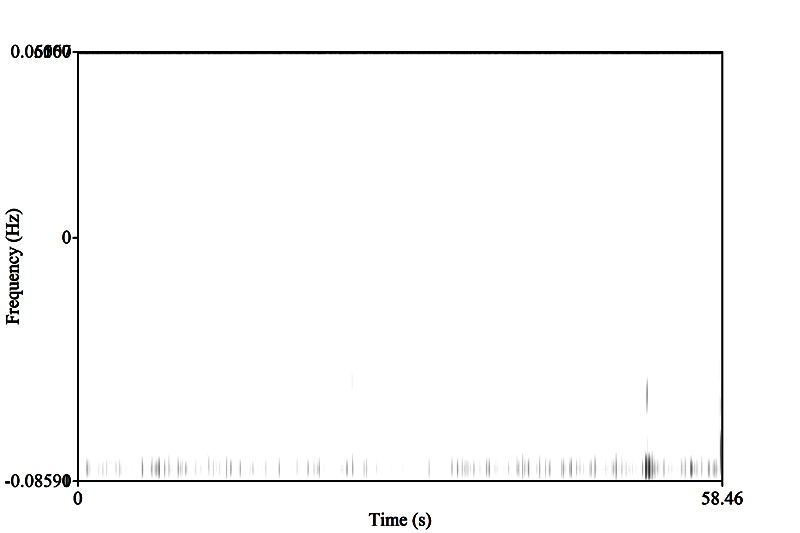
Bonus spectrogram
Mom chirps as she lays the egg. I'm not real happy with this spectrogram because there was
a lot of noise versus signal, but her soft chirps can still be seen.


Tuesday, March 24, 2015

Egg Colors and Shapes

The Chicago Peregrine Program inspired me to write a quick blog on the colors and shapes of eggs. Bald eagles have white eggs, peregrine falcons have eggs that range from light cream through brick red, and red-tailed hawks have pale eggs that are lightly splotched with brown. How and why do the birds we watch lay differently-colored eggs?


In general, female birds inherit egg colors and patterns from their female parents, who are ZW heterogametes. Egg-shell is made primarily of calcium carbonate, a white material, so the default color of all eggs could be considered white. As an egg moves down a female bird's oviduct, it squeezes or presses against glands that produce colored pigments from the breakdown of hemoglobin. Some colors (blues and greens) are applied very early on in the shell forming process, while others (brown) are applied quite late. Color may be applied relatively evenly or in drips and drabs depending on the bird and the speed of the egg through the female's oviduct. If the egg is stationary or moving very slowly, it may be solid, blotched, or spotted. If it is in motion, it will be streaked.

Coloring eggs carries a metabolic cost, so why aren't all bird eggs white? It's believed that birds with white or nearly white eggs have nesting strategies that hide their eggs from predators without the use of color. They might nest in cavities like barn owls, cover their eggs in vegetation like geese, or begin incubation immediately, like bald eagles. Since the eggs aren't visible to predators, camouflage colors and/or cryptic markings don't provide a survival advantage. Birds that lay colored eggs tend to nest in places or ways that are more visible to predators. Peregrine falcons, for example, don't usually begin full incubation until after their third egg is laid. The red color and light speckling helps conceal peregrine eggs when Mom and Dad aren't sitting on them and could make the eggs harder for nest invaders like raccoon to find. Ten or 20 seconds might buy enough time for enraged parents to drive nest intruders away.

So why do red-tailed hawks lay lightly speckled eggs while eagles lay white, highly visible eggs? Both birds begin full incubation right away and nest in fairly similar ways. We don't know for sure, although eagles in general are highly visible (giant nests, flashy black and white colors, six-foot wing spans) while hawks tend to be more concerned with concealment. The differences in egg-coloration might reflect some aspect of their lives we don't understand, but either way, egg-coloration is driven by survival. Hawks must need to conceal their eggs where eagles do not.

Predators aren't the only problem birds face. Some birds commonly dump or lay eggs in the nests of other birds. Splotched, spotted, or streaked eggs may help individual birds recognize their own particular markings and reject eggs that don’t match. So why don't Canada geese, which egg-dump, lay patterned or marked eggs? In this case, I suspect that non-parental eggs don't impact the survivability of parental eggs very much. Canada geese are precoccial, so young require less parental investment once the eggs hatch. Canada geese also time hatching quite tightly, so an egg dumped at the wrong time won't survive.

How about egg shape? Peregrine falcons, Bald eagles, and Red-tailed hawks lay differently colored eggs, but the eggs of all three species are elliptical or oval in shape. We used to think that egg shape was influenced by clutch size and the need to stack eggs, calcium availability, and/or 'the roll factor' - ie, heavily tapered eggs roll in a tight circle instead of rolling off ledges. But in 2017, Professor Mary Caswell Stoddard and her team found that the shape of an egg correlates with the hand wing index, a measure of the shape of the wing.  Faster, frequent flyers have longer, narrower, pointier wings, which translates into a high HWI. Birds that are weaker and less frequent fliers have shorter, broader, more rounded wings, which translates into a low HWI.

So why would flying ability influence egg shape? The maximum size or width of a stretched oviduct is constrained by a bird's body size. Faster, frequent flyers have reduced body sizes and abdominal cavities relative to weaker, less frequent fliers. Their muscular, streamlined body plans and narrower oviducts can't accommodate large, round eggs, but their eggs still have to carry enough nutrients to support embryonic development. These birds maximize egg volume by forming elliptical (oval) or asymmetrical (one round, blunt end and one narrow, pointier end) eggs that can pass through their narrow oviducts while still carrying the nutrients their embryos need to develop and grow.

So how do they do it? While I tend to think of eggs as being shaped by their stiff outer shells, an egg's inner membrane determines its shape. Birds that form elliptical or asymmetrical eggs lay down a membrane that is thicker on the big end and thinner on the pointy end. As an egg moves through a bird's oviduct prior to eggshell development, the thinner end is squeezed and elongated to produce an asymmetrical egg.

In general, egg color and shape is influenced by survival. Female birds that produce more young will out-compete female birds that don't. Egg-color and shape may be influenced by overall health (healthier birds tend to lay more vibrant eggs), metabolic cost, the need to hide from predators, the need to identify one's own eggs, and the shape imposed on an egg by the parent bird's body plan. In all cases, our parents have demonstrated egg-ceptional egg-care! We look forward to eggs soon!

Things that helped me learn and write about this topic:
For more on birds of prey and body plan, read this blog: https://raptorresource.blogspot.com/2017/03/falcon-and-bald-eagle-body-plans.html

Monday, February 23, 2015

Eggs, eggs, eggs!

Egg Questions and Answers

How long does it take a bald eagle egg to hatch?
There are two ways to think about this: from egg laying to hatch, and from pip to hatch
  • From egg-laying to hatch: Most experts say 35 days, give or take a few. In Decorah, hatches have ranged from 35 to 39 days after lay, with the first egg usually taking the longest. I'd look for first hatch to occur about 38 days after lay, so we're looking at March 28.  In Fort St. Vrain, hatches have ranged from 36 to 40 days after lay, with the first egg usually taking the longest, so we're looking at March 25th. But it could be a little earlier or a slightly later than that.
  • From pip to hatch: Pipping occurs when the baby eagle's egg tooth first breaks through the eggshell. It can take as long as a day for the chick to fully hatch. 
How big is an eagle's egg?
Bald eagles lay white, oval shaped eggs. Size-wise, they are just a tad smaller than a tennis ball, although tennis balls are round, not oval. They weigh approximately 125 grams or 4.4 ounces, and are on average about 2.9 inches long and 2.2 inches wide.


How many eggs will the eagles lay? Will all of their eggs hatch?
Although the most common clutch size for eagles is two eggs, the Decorah Eagles and Fort St. Vrain  have a history of laying three eggs. The breakdown among bald eagles in general is as follows:
  • 79% of clutches have two eggs
  • 17% of clutches have one egg
  • 4% of clutches have three eggs
Both sets of eagles have hatched all of their eggs to date; however, fertilized eggs can fail to develop due to extreme cold, soft shells, or microorganisms. We are hopeful they will have another great year, but we won't know until it happens.

What is in those eagle eggs?
At this point, the developing embryo is still quite small. It is surrounded by the amnion, a fluid-filled bag that helps protect it from jarring and sloshing. The yolk and albumin provide nourishment and additional cushioning, the allantois filters out waste products from the kidneys, and the chorion provides ventilation.  Inner and outer shell membranes help safeguard the embryo from bacterial contamination and keep the egg's insides from leaking out through its highly porous surface.  Embryo, fluids, and membranes are all enclosed in a chalky membrane that strengthens the egg, providing an additional layer of protection from punctures and pressure. An outer cuticle on the chalky membrane (what we think of as the shell) gives texture and even more protection to the eggs.

How do eagle parents care for eggs?
Eagle parents ensure optimal temperature and humidity by alternately incubating, getting off, and rearranging their eggs. While turning eggs might be a matter of instinct, it also prevents the embryos from sticking to the insides of their eggshells, and it optimizes membrane growth. They move very carefully around the eggs, often balling or partially closing their long, sharp talons to keep from puncturing the eggs. Concerned about the amount of time the eagles are spending off the eggs?
Read this blog: http://raptorresource.blogspot.com/2014/02/eggs-and-cold-weather.html

The following resources helped me learn and write about this topic:
  • Bald eagle egg size and color:
    http://eaglenest.blogs.wm.edu/2010/02/04/bale-eagle-egg-size-and-color/
  • What's inside that egg?
    http://eaglenest.blogs.wm.edu/2010/02/26/what-is-in-those-eagle-eggs/
  • The importance of egg-turning:
    http://www.wqed.org/birdblog/2013/04/12/turning-the-eggs/
  • Previous blogs at this site.
Did you know?
Some birds bury their eggs in compost heaps to incubate them. Meet the megapodes!
http://www.wqed.org/birdblog/2011/08/18/born-in-a-compost-heap/

Thursday, April 03, 2014

Turkey Vulture Mystery!


We have a turkey vulture mystery! As Eaglewhisperer18 recorded yesterday, the turkey vultures returned to their loft in Missouri. TV enthusiasts were thrilled to see them after an unknown turkey vulture destroyed an egg and disrupted nesting last year.

I didn't think we'd see an egg until mid-to-late April, since our TV didn't lay until April 24 last year. I was shocked to learn that at egg had been spotted in the barn today at around 11:45am, and even more surprised to watch the female vulture seemingly pull it out of a corner, absent any laying. The egg was clearly a recently-laid turkey vulture egg, since any eggs laid last year wouldn't have survived a summer in the barn: http://youtu.be/3PV9wg8hrko.

Did our Mom lay this egg? I don't know! She wasn't seen laying it, although the camera wasn't on her the entire time. Complicating matters even further, a video taken yesterday suggests there may have been three turkey vultures in the barn.
http://youtu.be/yul54oscafU

The action goes something like this:

Turkey vulture A flies in in at :02
Turkey vulture B flies in in at :07
A walks back to the nest area at :22.
B walks back to the nest area at :47
B leaves the nest area at :51
An odd flicker or shadow occurs at 1:38. Could this be another TV?
B leaves the barn at 1:42
A (presumably) leaves the nest area at 1:45 and walks to the middle of the barn
Unknown TV M suddenly appears on a bale adjacent to the nesting area at 2:00. It walks toward the door.
A returns to the nest area about 2:20
M follows at 2:47
A TV leaves the nesting area at 3:13 and perches on a haybale
A TV flies out of the nesting area quickly at 3:29, while the TV perches on the bale heads for the door.
The TV by the door wanders back and forth between the barn abd the nesting area until the video ends.

At present time, the female doesn't appear to be incubating the egg and we have no idea who laid it. If you have any suggestions or observations, please let us know in the comments! You can watch live at http://www.ustream.tv/missouriturkeyvultures

Friday, March 28, 2014

Three Bald Eagle Eggs at Fort St. Vrain!

We have three bald eagle eggs at Fort St. Vrain, and the camera is back! The eggs were laid as follows:
  • Egg #1: February 21
  • Egg #2: February 24
  • Egg #3: February 28
The eagles have tended to be closer to 39 days here, so the eggs should start hatching on roughly April 1st. April 1st might be a very busy day for us, since it's also the first possible hatch day in Decorah and the projected 'jump' day for Canada geese Fred and Wilma's brood at Eaglecrest, assuming hatch happens there on March 31st. 

To watch Fort St. Vrain online, visit one of the links below: 

When will the eggs hatch in Decorah?

We've had a lot of people ask when the eggs will start hatching in Decorah. Mom laid the eggs as follows:
  • Egg #1:02/23/2014 @ 4:55pm
  • Egg #2:02/26/2014 @ 5:33 pm
  • Egg #3:03/02/2014 @ 6:43pm
As several of our mods have pointed out, this almost exactly mirrors 2011. So if the hatch occurs as it did then, we should see hatch #1 on April 1, hatch #2 on April 3, and hatch #3 on April 6. However, eagle eggs can take from 35 to 39 days to hatch, and the spring of 2011 was unusually warm and dry. If we go with the 39 day figure given this year's extreme cold, hatch #1 should start on April 3, hatch #2 on April 6, and hatch #3 on April 10.

In short, we're predicting that the hatch could start any time between April 1st and April 5 based on what we know about the eggs, the eagles, and the weather. We'll be watching Mom & Dad as they roll the eggs to see if they just roll them, or if they stop and stare, looking for a pip hole or listening for a chirp from inside the shell, and offering chirps back as encouragement for the chick to chink away at the egg.   The pipping process can take from 12-24 hours before the hatchling emerges. Stay tuned!

Monday, March 24, 2014

Canada Goose Update

The goose and the hawk. Hawks drive the
intruder from their nest.
In the last blog, I speculated that Wilma's nest intruder could have been dumping eggs. It looks like she dumped not one, but two! From Eaglecrest:

Canada goose Mom Wilma is incubating NINE EGGS...seven of her own and two laid right in her nest by a female intruder. The two "foreign" eggs were laid on 3-15 and 3-22. In both cases, Wilma relentlessly attacked the intruding goose until she left. We may not have seen the last of her. The two intruder eggs will not hatch with Wilma's...they are eleven days or more behind schedule. Wilma began full time incubation of her SEVEN eggs on Tuesday, March 4th. We will expect the little goslings to hatch around March 31st...with the "big jump" about April 1st. Mate Fred is in constant protection mode, as usual.

We've been asked why this goose is behaving so strangely. Why is she dumping eggs? Why is she trying to sit in a hawk nest? I'm speculating that our invader is responding to the recent death of her mate. I haven't seen her accompanied by a male, which is extremely uncommon. Mated male geese are almost always hovering around their nesting mates, protecting them from predators and other geese. A study done at Horicon March in 1959 indicated that reduced breeding productivity was almost entirely connected with goosey social behavior. The authors of the paper wrote: 

"Over half the birds assumed to be capable of breeding failed to make nests in which they laid and incubated eggs; one-fifth of the birds failed even to pair up effectively. The nine pairs that failed to lay eggs in nests were involved in unusually frequent territorial clashes, and most of them were unable to maintain stable territories for any length of time. Four of the 5 pairs (and perhaps all 5) that lost their clutches did so because of disturbance to the female from other geese, related to a lack of effective male defense."

So our unknown intruder doesn't have a male to help safeguard her nest from other geese, who can be very disruptive to laying and sitting. What seems like erratic behavior is really an attempt to produce young under extremely difficult circumstances. While the intruder's eggs won't survive this spring, she'll most likely pair up with a new male goose to try again in 2015. There is no shortage of geese at Eaglecrest!

Geese have an elaborate, shifting hierarchy ruled by ganders with large families. I'll write a little more about the importance of family once the eggs start hatching. To watch Eaglecrest live, go to http://www.ustream.tv/eaglecresthawks. We anticipate hatch in Wilma's nest at the end of March or very early in April. 


Resources

Social Behavior and Breeding Success in Canada Geese (Branta canadensis) Confined under Semi-Natural Conditions
Nicholas E. Collias and Laurence R. Jahn
The Auk
Vol. 76, No. 4 (Oct., 1959), pp. 478-509
Published by: University of California Press
Article Stable URL: http://www.jstor.org/stable/4082315

Some of what we're seeing could also be a response to crowding, which impacts reproductive and social behavior. As California's drought reduces water resources, birds and other animals crowd more densely around those that remain. We'll explore the impact of crowding in a future blog.

Monday, March 10, 2014

Canada Geese: Precocial versus Altricial

Three Canada geese at Eaglecrest are currently sitting on eggs. "Wilma", in the home tree, has laid seven eggs to date. She started full incubation on March 4th, which puts her hatch between March 27 and March 31. Betty has three or more eggs in the east pond nest, and Lucy has two or more eggs in the elevated pond nest.

The most common question about Eaglecrest's Canada geese is probably "How will the parents feed so many young?". While large broods are fairly common in many kinds of birds, Canada geese don't have to feed their young. Read on to learn more!

Precocial versus Altricial
From Stanford University:  A precocial bird is "capable of moving around on its own soon after hatching." The word comes from the same Latin root as "precocious." Altricial means "incapable of moving around on its own soon after hatchling." It comes from a Latin root meaning "to nourish" a reference to the need for extensive parental care required before fledging in altricial species. 

So what's the big difference? Precocial birds like Canada geese lay energy-rich eggs to support the greater in-egg development of their young, who hatch ready to go. Their large, energy-rich eggs may contain almost twice the calories per unit weight than the eggs of altricial birds, which means that precocial females must obtain abundant food resources before laying eggs. Altricial birds like bald eagles, barn owls, and peregrine falcons do not have such large nutritional demands before egg-laying, but they have to find sufficient food once their helpless young hatch. While individual precocial birds are vulnerable to predation, it is much less likely that an entire brood will be eaten or destroyed. Altricial young cannot leave the nest prior to fledging, while precoccial young leave the nest quickly and have some ability, even when very young, to avoid predation.

Stanford University also tells us that there seems to be a trade-off in bird brain sizes related to the the degree of precocity. Precocial species have relatively large brains at hatching, but their adult brains are smaller relative to body size (the brain/body-mass index) than those of altricial birds. While altricial young hatch with smaller brains, they have highly efficient digestive tracts and a rich, parent-provided diet. Post-natal brain development is great and adults have proportionally larger brains than precocial species. Is this because they have more energy available to grow larger brains, or is something else going on? We're still trying to figure it out. This abstract hypothesizes that delaying brain development (by lengthening childhood) gives brains a longer period of time to grow and become more complex: http://goo.gl/sNw3xe.

At any rate, our hatchlings face very different challenges. Precocial Canada geese are relatively mature and mobile from the moment of birth, unlike altricial Bald eagles, Barn owls, and Peregrine falcons. Eagle, owl, and peregrine parents bring food into the nest for their young, often caching or storing prey for later consumption. Their young don't need to leave the nest or procure food until they fledge. The young goslings leave the nest within 24 hours of hatching and do not return to it. While their parents continue to provide protection and care, the goslings feed themselves.

The precocial goslings are also able to thermoregulate right away, unlike the eaglets and owlets. Altricial birds require their parents (or a parent) to apply warmth until their down feathers are developed enough to insulate them. The eagle parents and mother owl will spend a great deal of time huddling over their young after they have hatched, but the Eaglecrest geese will take to the water quite quickly, with no huddling required.

Eaglecrest offers a plethora of wildlife, including Canada geese, for watching. Visit http://www.ustream.tv/eaglecresthawks to see them! Again, we are anticipating goose hatch some time between March 27 and March 31.


Resources

Stanford University, Altricial and Precocial: http://www.stanford.edu/group/stanfordbirds/text/essays/Precocial_and_Altricial.html

Patterns of Metabolism and Growth in Avian Embryos
Carol Masters Vleck, David Vleck and Donald F. Hoyt
American Zoologist , Vol. 20, No. 2 (1980) , pp. 405-416
Published by: Oxford University Press
Article Stable URL: http://www.jstor.org/stable/3882403

The Evolution of Parental Care in Birds
A. Ar and Y. Yom-Tov
Evolution , Vol. 32, No. 3 (Sep., 1978) , pp. 655-669
Published by: Society for the Study of Evolution
Article DOI: 10.2307/2407731
Article Stable URL: http://www.jstor.org/stable/2407731

Developmental Modes and Developmental Mechanisms can Channel Brain Evolution
http://openi.nlm.nih.gov/detailedresult.php?img=3037498_fnana-05-00004-g003&req=4

Saturday, March 08, 2014

Eggs and Incubation

Why are the eagles off their eggs? Will the eggs survive? What happens during incubation? These are just a few of the questions we get about incubation. I'll see if I can answer some of them here.

An infertile chicken egg. See the blastodisc?
Unlike most birds, chickens will lay eggs even when a male isn't present. We'll start with a quick look at an unfertilized egg, pictured at right. From the Chicken Chick: An infertile egg contains only the hen's genetic material, which means a chick can never hatch from that egg. The hen's genetic material, termed the blastodisc, can be identified on infertile eggs as a light-colored dot with irregular borders. Every egg contains a blastodisc. My breakfast, at right, is an infertile, organic, cage-free 'Egg-Land' chicken egg. The blastodisc can be seen in the center of the egg. If the egg is fertilized, the blastodisc turns into a blastoderm - the first stage of embryonic development. End stage? Hatchling bird!

Let's assume we have a fertilized egg, discussed here. As the embryo develops, it will consume both the fatty egg yolk and high-protein egg white. By the end of day two, our little chicken will have a heartbeat. Its beak and egg tooth will begin to form on day six, and its feathers on day eight. By day nine, it will begin to look somewhat like a bird, and its mouth opening will form. On day thirteen - well, just go look at this blog for the rest.

So what does the developing embryo need to survive? We discussed the importance of temperature here, but incubating birds (or incubationist humans) also need to control humidity, move or turn the eggs, and make sure the eggs are well-ventilated.

Keeping Eggs Alive
Why were the eagles off the eggs so long on March 7th? We were asked this question on facebook, ustream, and via email. I think the eagles may have been giving the eggs a chance to dry out and breathe.

A bird's eggshell has thousands of tiny pores, which allow water and gas to pass through. Mammals like us get oxygen through an umbilicus, but developing birds receive oxygen and remove carbon dioxide through the egg shell. Gases, including oxygen, enter and leave the egg by diffusing through the pores in its shell, across the outer and inner shell membranes, and into the blood in the capillaries of a special tissue called the CAM, or chorioallantoic membrane. As the weather warmed in Decorah, the snow began to melt and the humidity soared. Condensation can form on eggshells exposed to excessive humidity, which clogs shell pores and provides a vehicle for bacteria. The result? Fatal suffocation and/or contamination. Only the eagles know for sure, but I think they may have responded to the threat of rising humidity levels by leaving their eggs uncovered. Standing or leaving entirely allows fresh air to circulate over the eggs, dropping the humidity level and giving the developing embryos fresh air. Turning or rolling assists air exchange, helps maintain an even egg temperature (especially in big egg piles, where outer eggs may be cooler than inner ones), and keeps the developing embryo from sticking to the eggshell.

In short, most bird eggs require specific temperatures, proper humidity, regular movement, and air exchange. Birds provide these by applying body heat, standing and/or leaving for periods of time, and rolling or turning their eggs. In birds, incubation is both an instinctive and learned behavior  - while birds will automatically incubate eggs or egg-shaped things, they get better at incubation with experience. There are no guarantees,  but Mom and Dad are skilled incubators with a long history of brooding together. Watching them meet the challenges of their environment gives me hope for their eggs. Go eagles!


Resources

Bob Anderson, personal communication.

The Chicken Chick. This is a really neat site for those of us who love chickens!
Brinsea. For all your incubation needs.
Texas A&M.


Did you know?

We usually talk about birds, but people also incubate snake eggs! This video from Snake Bytes discusses the ins and outs of snake incubation: http://youtu.be/JlSS5wap-Zc